On Courage: Facing The Void
Sometimes I think about the void.
“Look again at that dot. That’s here. That’s home. That’s us. On it everyone you love, everyone you know, everyone you ever heard of, every human being who ever was, lived out their lives. The aggregate of our joy and suffering, thousands of confident religions, ideologies, and economic doctrines, every hunter and gatherer, every hero and coward, every creator and destroyer of civilization, every king and peasant, every young couple in love, every mother and father, hopeful child, inventor and explorer, every teacher of morals, every corrupt politician, every ‘superstar,’ every ‘supreme leader,’ every saint and sinner in the history of our species lived there — on a mote of dust suspended in a sunbeam.”
— Carl Sagan, Pale Blue Dot
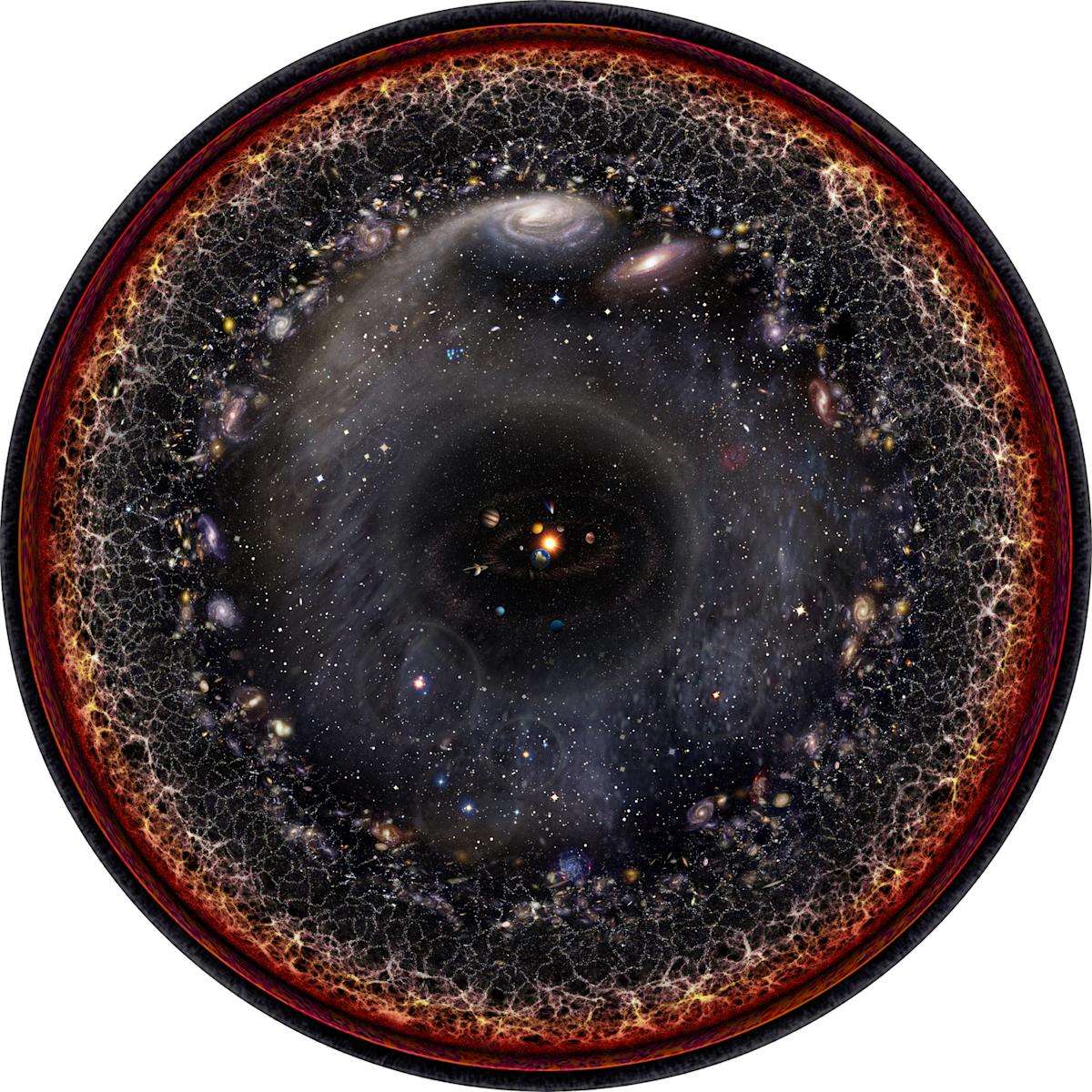
On this spinning rock, out in the great void, in an inconceivably large universe, our squabbles seem cosmically small. And yet we sit at a vantage point in human history where humanity’s values and actions – and those of the AI systems that we raise – may shape the lives of a staggering number of sentient beings that will (or won’t, as a result!) exist in the future. Within the span of just one generation, the world will likely look extremely different. Superintelligent systems may enable progress on the scale of the industrial revolution just a matter of years, absent physical-world bottlenecks; humanity will confront enormous philosophical challenges, such as whether to upload emulations of ourselves; our institutions may be stress-tested by a succession of AI-engineered pandemics; our leaders will see us through escalations towards great power conflicts.
Taking this seriously raises various interesting questions for AI development: how do we design model specifications which motivate the behaviour we want to see in models? How do we – and can we – ensure this continues into the far future, even as models become vastly superhuman? What technical methods can ensure models robustly follow the spec? Can we train AI systems to be deeply wise, and to eventually help humanity itself become more wise, loving, actualized?
I’m also excited for people to cultivate and battle-test their decision-making systems: as the world becomes more chaotic, sane, well-calibrated decisions will be necessary. This could look like developing an understanding of your emotional drives; an explicit orientation towards a normative ethics framework111I’ve personally moved towards virtue ethics over time, as an antidote to self-deception, and accounting for the limited capacity of humans to forecast consequences as well as the fragility of deontological rule-following. ; and proactively assessing decisions you’ve made and what they reveal about your true preferences.
I suspect that to do this effectively requires something shaped like deep “moral courage”: the sort that tugs on me when I spot homeless people on the sidewalk, where I feel a call to ask myself with sincerity what I want to do about it, taking into account the myriad of tradeoffs I’d inevitably make between my desires for convenience, to be virtuous, to be seen as a particular sort of person, my aspirations for how others move through the world, and so forth. Courage, in this sense, is the willingness to stare into the abyss at ideas and the parts of you that make you uncomfortable; to notice that they tend to slip out of your hands like water; to price them into your decisions.
Real moral courage will need to cache out in actions, and I don’t touch on that here. I’m more excited, for now, to focus on what is upstream.
“Until you make the unconscious conscious, it will direct your life and you will call it fate.”
— Carl Jung
These sorts of internal investigations are instrumentally useful for good decision-making, but I think that they can also generate a feeling of deep freedom: imagine spending time creating internal consistency between your perception, emotions, actions, and your understanding of how to live well, until you waste minimal energy fighting between your contradictory desires. Until the way you move through the world feels as gentle – yet persistently strong – as the drip of water against a stalactite.
There is a way that they can go too far. People importantly do have a ton of illegible parts and parts that are buried deep away from the light, and to attempt to identify those illegible parts can be a lost cause. We have really poor mechanisms for understanding our interiorities. I think it’s important to not force legibility when you genuinely have a lot of uncertainty about what is going on. It’s easy to prematurely assign a story or label to some experience, to treat that story as true, and to stop looking for alternative hypotheses that might better explain what is going on. This is in the direction of Wu-Wei: don’t force your soft parts into the light, but do allow yourself to slowly learn to hear what they’re saying, and decide how much weight they should carry. Or as Henrik Karlsson puts it, “unfolding”.
And then separately from this practice: it matters, and it’s special, to do things that unlock your primal joy of being human. To learn to dance. To spend occasional weekdays staying up too late with your friends, at cost to the next day’s productivity. To watch a father swim with his toddler and the sunlight pass over the water. For in the end, we live in the void, and all we have is each other, buffeted by the ripples we each leave behind.